
When your security system works, nobody notices. When it fails on the one day it matters, someone answers for it.
Sometimes it costs a job. Sometimes it costs more. Concept’s job is making sure that day never comes.
Six systems under one roof, and the network they all run on.
Electronic security · Fire & life safety · Access control · BMS · Automation · AV · and the network they all run on
- 27
- Years
- 200+
- Institutional clients
- 15
- Sectors served
- 6
- Systems
- 1
- Party accountable
Where the risk lives
From the gate to the command room.
Every site has an approach, a boundary, an interior and a room where it is all watched. Most have a different vendor at each. We hold all six.
- 01 Outside the gate ANPR, perimeter detection, first sight before anything reaches your gate. Normally 3 vendors
- 02 Entry Barriers, UVSS, guard interface, visitor pre-authorisation. Normally 3 vendors
- 03 Inside the building Circulation, parking, coverage continuity, exit reconciliation. Normally 3 vendors
- 04 Who goes where Readers, tiering, contractor access, integration with HR records. Normally 2 vendors
- 05 Work areas Fire detection, evacuation, BMS interlocks, high-value zones, AV. Normally 5 vendors
- 06 Control room VMS, escalation, evidence retention, reporting, data residency. Normally 3 vendors
19 vendors, normally. One of us.
One trigger, two buildings
A smoke detector goes off. Watch what should happen, and what usually does.
Integrated by one party
- Detector confirms, panel escalates
- Doors on the affected floor release
- Lifts recall to ground and hold
- Dampers close, pressurisation starts
- Cameras pin and begin evidence capture
- Announcement plays on the right floors, in order
Five vendors, nobody owning the joins
- Detector confirms, panel escalates
- Doors stay locked: access was a separate contract
- Lifts continue running
- Dampers never wired to the panel
- Cameras keep their pre-set patrol
- One siren, every floor, no instruction
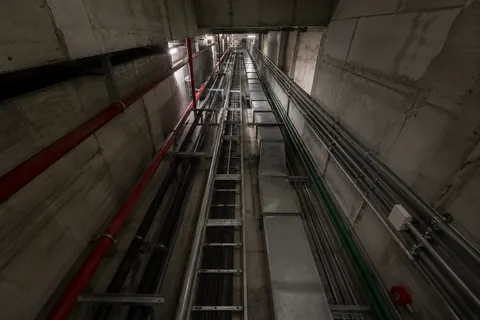
Every industry has its own worst day.
A jeweller worries about the insurer. A bank worries about the auditor. A factory worries about the fire inspector. Same systems, completely different reason for having them.
A cold store worries about the hours nobody is there. A hospital cannot evacuate. A data centre is audited by its own clients. And a substation at two in the morning has nobody in it at all.
We work across fifteen industries, and we specify differently for each.
- JewelleryStrongroom timing, insurer evidence
- Banking & financialBranch estate, retention, audit
- ManufacturingProduction continuity, material gates
- Cold chain & logisticsUnmanned hours, temperature interlocks
The same building, quoted three ways.
Three companies quote your building. You compare the three numbers and take the lowest. That is L1, and everybody does it.
But the three quotes are not for the same building.
Somewhere in the cheaper quote, the scope got smaller. Fewer cameras than you have today. A smaller panel. Less storage. Nobody told you what was removed, because it only shows up as a smaller number at the bottom of the page.
Then there are the things that were never listed at all. Conduit, casing, junction boxes, racks, power supplies, connectors. They are not optional: the system does not work without them. They will be bought. Later, as extra work, at a price nobody quoted.
And some of it will not hold. Storage sized for a lower quality than the cameras actually record at, so thirty days of footage becomes twelve. More devices than the switch has ports. Cable billed “on actuals”, which is not a price.
None of this is visible when you are comparing three totals on one page.
-
L1
Year 3
Half the cameras show black and nobody noticed. Footage was asked for and it was not there. The fire panel was never connected to the doors, the lifts or the air handling, so when the alarm sounds nothing else responds.
-
Mid
Year 5
It works, but as five separate systems. Every fault becomes an argument about whose fault it is.
-
Designed properly
Year 7+
Still one system. Documented, maintained, and you can add to it without pulling out what is there.
You would not buy the cheapest insurance policy. This is the same decision, and it lasts longer.
How we got here
Installer, then integrator, then the firm that is asked what should be specified.
- 1999Trading begins. Alarm panels, door to door, single city.
- 2007First multi-system integration. Fire tied to access for the first time.
- 2011Public infrastructure at scale, across a city-wide estate.
- 2016BMS and automation added. Six systems in one house.
- 2021Command-room design and integration platforms.
- 2026200+ institutional clients, 15 sectors, one crore sq ft.
Proof
Three sites, three constraints.
Site assessment
41 of 60
Cameras dead before the first AMC visit
Site assessment
9 sec
Vault-to-command escalation at a diamond bourse tenant
Site assessment
14 sites
One specification across a listed manufacturer’s estate


Where an NDA applies we show the sector and the scale, not the name. A security firm that name-drops is a security firm that will name-drop you. Who we work for.
Year seven
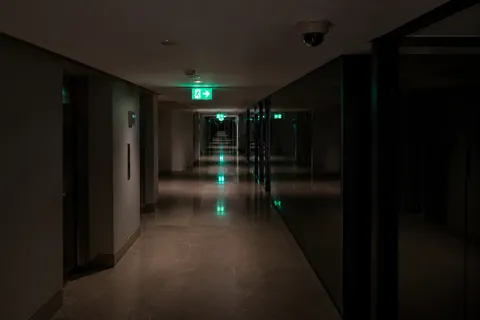
Nothing in a security system looks different on the day it stops protecting and you need it the most.
- 1 We verify
- 2 We rectify
- 3 We maintain
Even if somebody else installed it, we check it, fix what’s wrong, and then look after it like our own.

twenty-seven years of walking into other people’s buildings.
Concept Equipments has been installing and maintaining security, fire and building systems in Mumbai since 1999. Most of what we are called for is not a system that stopped. It is a system that looked fine until the day somebody needed it.
Over 200 institutions have trusted us with that. Including Mumbai Police across 105 stations, the Indian Navy, HDFC, NPCI, BPCL, Taj Hotels and Bharat Diamond Bourse.
Insights
Written from the site, not from a desk.
Notes on what actually fails in installed systems, and why. Published monthly, syndicated from Piyush’s LinkedIn.
No posts placed yet. The first batch of eight is part of the monthly cadence. See what is coming →
- 15
- sectors served
- 200+
- active sites
- 7 to 10
- years, typical relationship
- Pan India
- deployment
Before you spend anything
Find out what is actually working.
Every camera, panel, reader and sensor tested. A signed condition report, and it is yours whether you take cover or not.
The assessment is chargeable, quoted against the site, and adjusted in full against the first year if you take cover. Where cover is not taken, the fee covers our team’s time on site and the report we leave behind, and the report is yours either way.
Chargeable, and adjusted in full if you take cover.
Book an assessment