Year seven
We do not start with a contract. We start with an assessment.
Most maintenance conversations begin with a tier and a price. This one begins with finding out what your system is actually doing today, because until that is known, every number in it is a guess.
Nothing in a security system looks different on the day it stops protecting.
The ladder
- 01
We assess
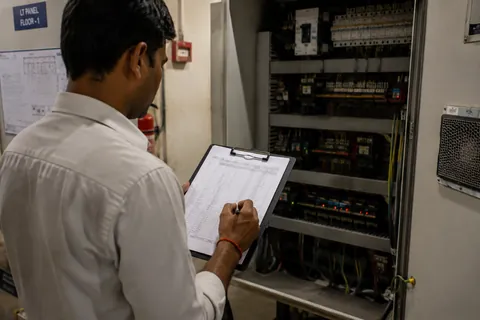
Every camera, panel, reader and sensor tested. A signed condition report naming what works, what has failed, and what was never commissioned properly. The report is yours regardless of what you do next.
- 02
We rectify
Quoted line by line from the report. No bundling, and no obligation to continue with us afterwards. You are free to take the report anywhere and have the work done by whoever you choose.
- 03
We carry it
Bronze, Silver or Gold. Coverage stated plainly with the exclusions visible. This is the destination, never the entry point.
What we find on the first visit
Every system reports healthy. That is what makes this expensive.
These are from assessments we have actually run. None of these sites had reported a fault, and none of them knew.
- 41 of 60
- Cameras dead or degradedA Lower Parel high-rise, before the first maintenance visit. Nothing had been reported.
- 12 days
- Retention on a system sold as 90A failing drive had been overwriting for months while the recorder reported healthy.
- 0 of 6
- Hold-up devices connectedSix panic buttons installed, tested at handover, connected to no receiving station.
Cover, stated plainly, with the exclusions visible
Every tier is answered the same working day. What differs is how quickly an engineer is on site.
| Cover | Bronze | Silver | Gold |
|---|---|---|---|
| Preventive visits | Half-yearly | Quarterly | Quarterly, plus a monthly remote health check |
| Breakdown attendance | Capped per year | Capped per year | Unlimited |
| Engineer on site | Next working day | Next working day | Committed attendance window including Sundays, agreed per contract |
| Interlock testing | Not included | Annual | Half-yearly, with a certificate |
| Reporting | Visit reports | Quarterly summary | Monthly, written for management |
| Named engineer | Not included | Not included | Yes, with a documented second |
| Spares | Ordered on failure | Ordered on failure | Critical spares held for your site |
| Annual re-assessment | Not included | Not included | Included |
| Platform and licence currency | Not included | Tracked | Tracked and renewed |
| Parts | Quoted | Quoted | Included per the coverage schedule agreed for your site. Terms and conditions apply. |
-
GoldCarries the risk
- Preventive visits
- Quarterly, plus a monthly remote health check
- Breakdown attendance
- Unlimited
- Engineer on site
- Committed attendance window including Sundays, agreed per contract
- Interlock testing
- Half-yearly, with a certificate
- Reporting
- Monthly, written for management
- Named engineer
- Yes, with a documented second
- Spares
- Critical spares held for your site
- Annual re-assessment
- Included
- Platform and licence currency
- Tracked and renewed
- Parts
- Included per the coverage schedule agreed for your site. Terms and conditions apply.
-
Silver
- Preventive visits
- Quarterly
- Breakdown attendance
- Capped per year
- Engineer on site
- Next working day
- Interlock testing
- Annual
- Reporting
- Quarterly summary
- Named engineer
- Not included
- Spares
- Ordered on failure
- Annual re-assessment
- Not included
- Platform and licence currency
- Tracked
- Parts
- Quoted
-
Bronze
- Preventive visits
- Half-yearly
- Breakdown attendance
- Capped per year
- Engineer on site
- Next working day
- Interlock testing
- Not included
- Reporting
- Visit reports
- Named engineer
- Not included
- Spares
- Ordered on failure
- Annual re-assessment
- Not included
- Platform and licence currency
- Not included
- Parts
- Quoted
The row that matters is the last one. Bronze and Silver differ in frequency. Gold differs in who carries the risk. Per a coverage schedule agreed for your site, a failure is our cost rather than an unbudgeted quotation arriving on your desk.
Coverage is defined per site against the bill of quantities, the way a policy is written: a schedule stating what is covered and what is not, annexed to your contract. Terms and conditions apply.
The assessment is chargeable and the fee is quoted against the site, a house and a factory cannot carry the same fee. It is adjusted in full against the first year if you take cover. Where cover is not taken, the fee covers our team’s time on site and the report we leave behind.
What no tier covers
- Hard drives
- Consumables with a known failure curve, not a fault. Every tier excludes them, including Gold, and we say so before you sign rather than when one fails.
- Damage, theft, and anything outside normal operation
- Vehicle strikes, flooding, vandalism and electrical surge sit with your insurer, not with a maintenance contract.
- Gold parts cover is capped at a stated proportion of the annual fee
- The cap is printed in the contract and stated here, because a cap you discover later is worse than no cover at all.
Response
What you can hold us to.
- 6 days
- Technical support available six days a week, with a defined escalation path outside those hours.
- Named engineer
- Your site has an engineer who has been to it, not whoever is free that morning.
- Stocked spares
- We hold spares for the systems we maintain rather than ordering them after a failure.
- Written record
- A service record per visit. What was tested, what passed, what needs attention.
What the code already asks for
NBC Part 4 Section 9 sets the testing rhythm: monthly alarm tests, quarterly extinguisher inspection, half-yearly wet-riser flow, annual full-flow sprinkler. Most buildings we assess have a maintenance contract and no record of any of it.
The fire certification says the same thing in two words. Form A certifies what was built. Form B certifies that it still works. A building can hold a valid Form A and fail a Form B inspection without a single thing having been altered, because the second question is not the first question. Maintenance is how a building keeps answering the second one, and the answer is test records, not an opinion on the day. Our fire NOC guide sets out the sequence, and what to diarise.
Cover, by sector
If you install and would rather not maintain
Why this is the argument
What is under cover
Find out what your system is actually doing.
Every device tested, and a signed condition report. It is yours whatever you decide next.
The assessment is chargeable, quoted against the site, and adjusted in full against the first year if you take cover. Where cover is not taken, the fee covers our team’s time on site and the report we leave behind, and the report is yours either way.
Chargeable, and adjusted in full if you take cover.
Book an assessment